On March 9th, 2026, my dear friend Micah Bleich passed away after a courageous battle with lymphoma. He left behind his wife Cecily, his infant daughter Amelia, and a community of people whose lives he touched with his humor, honesty, and heart. What follows is my attempt to excavate and honor the little dent he made on my universe.

Micah Bleich (aka Kruger Dunn, aka the Full Dork) first took center stage at the proverbial comedy club of my life during a holiday gathering in my college years. Cecily, who had since graduated, had been my friend since freshman year, and now one of the smaller humans I knew was accompanied by this big goofy giant of a man who was Micah, her new beau. Micah won me over quickly with his disarming warmth, quick wit, intellectual banter, and dark probing eyes with a twinkle of irony, as though he were perpetually compiling observations about what he was witnessing and deciding whether or not to share them.
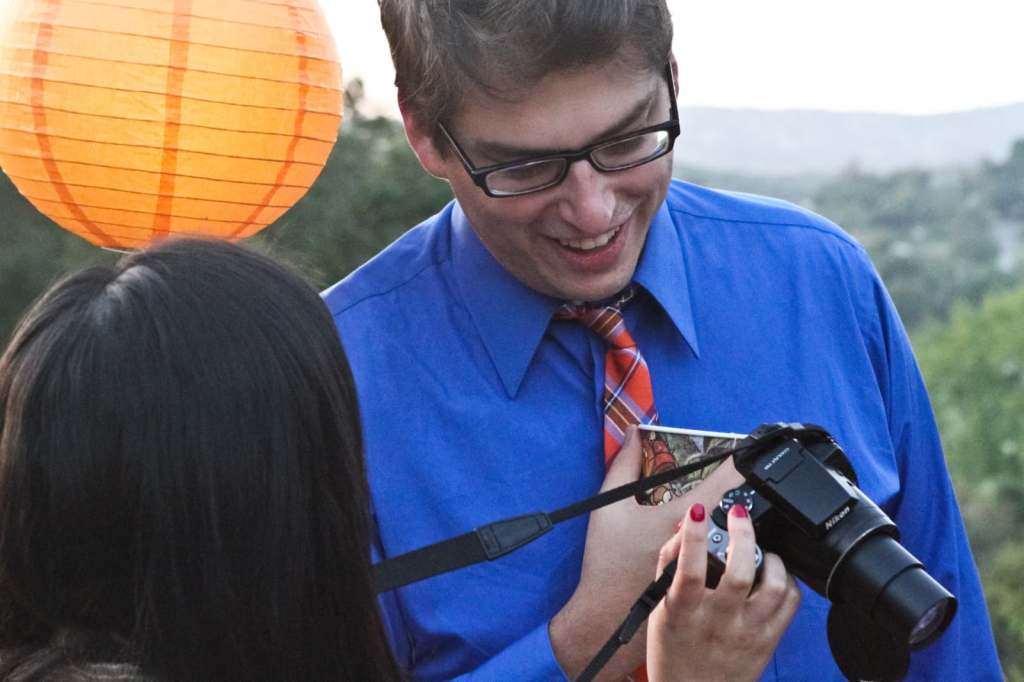
But it wasn’t his gift for humor that first struck me about Micah, but a gift he had bought for Cecily. It was a video camera to nurture her interest in multimedia and documentary filmmaking. For context, Cecily had more style, fashion sense, and taste than most of the dorks in my orbit. She was a DJ at our college radio station, had introduced me to many indie darlings like Sigur Rós and Explosions in the Sky, and had channeled her distinctive sensibility into some video projects, including a memorably quirky documentary about a potentially fake bicycle gang at UC San Diego called the Electric Warriors. It occurred to me that although Micah hadn’t been dating her for long, he got her something that said: I see what you’re doing, I believe in it, and I want to help you do more of it. It was such a simple gesture, but it revealed something essential about Micah’s character that I would come to understand more deeply over the years that followed. He had an extraordinary capacity for believing in the people he loved, sometimes more fiercely than he believed in himself.
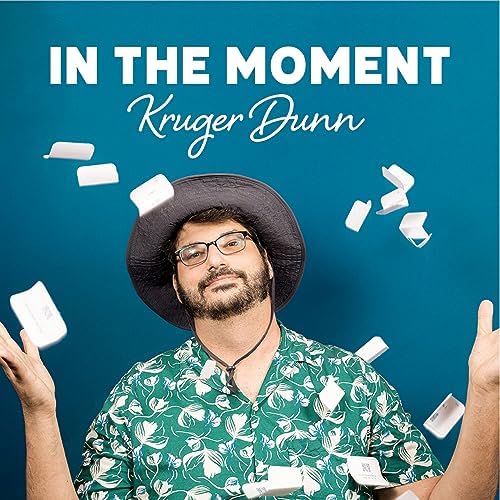
To call Micah a comedian doesn’t fully capture what he was really up to. Comedy was the vessel through which Micah processed the world and offered it back to the rest of us, transformed. He had this unsparing eye for the dysfunctions and hypocrisies that most people either couldn’t see or chose to ignore: corrupted institutions and technology, performative virtue, the limits of our knowledge, and the ways we all hide from ourselves. Micah’s creative genius lay in taking that clear-eyed and sometimes anguished perception and repackaging it into a joke that invited us all to share in the laughter. To witness the patterns the same way he did, and to feel a little less alone in having seen them.
Onstage, as his alter ego Kruger Dunn, a stage name that doubled as a sly riff on the Dunning-Kruger effect, Micah was in his absolute element. Freed from his usual anxieties, he became something like the ultimate court jester: standing firmly outside of every group, which gave him the vantage point to see and name what others couldn’t. He leaned hard into embodying the “Full Dork” – not a nerd, not a geek, and certainly not cool. A dork. In Micah’s evolving taxonomy, a dork was someone who didn’t fit into any group no matter what, even a group of misfits; someone whose commitment to honesty and individuality made belonging beside the point. He built an entire philosophy around it, and recorded a comedy special called On the Spectrum in which he excavated his late-in-life autism diagnosis with the same sharp, generous wit he brought to everything. The fact that he gave his comedy club the already SEO-optimized name, “Best Comedy Club Near Me Theater,” tells you everything about the glorious collision of technologist, comedian, and dork that lived inside Micah.
But his comedic mind wasn’t something that turned on and off with a stage light. It was the constant hum of his consciousness. Micah was always on, not because he was performing for us, but because it’s how his mind genuinely operated. He never missed a chance for a disarming quip or a pointed observation that would leave everyone in stitches. Once, while we were watching Joaquin Phoenix in Her, Micah pointed out how Phoenix is always leaning sideways in his films – frame after frame, movie after movie, affecting that same brooding, tormented, yet cool vibe with his oblique lean. It was the kind of thing you could never unsee once Micah had named it, which was one of his superpowers. When we had karaoke nights at the Brass Monkey, his and Cecily’s beloved haunt in Koreatown, he delivered hard-hitting raps like 99 Problems by Jay-Z with this silly deadpan tone that killed every time. Even in the hospital, on painkillers, knowing what we both probably knew, he was still cracking jokes and trading banter.
My friendship with Micah had a distinct texture. We were the kind of friends that would go quiet for stretches and then erupt into marathon text exchanges- sprawling, intellectually voracious conversations about AI, movies, evolutionary psychology, the comedy industry, the nature of intelligence, the absurdity of sexual selection-conversations that could spin off in twelve directions and last for days. We shared what I think both of us needed: someone who could see the same things we saw. Someone who made us feel less like aliens. Early on, when we first met, I apparently made some self-deprecating joke about being shy and robotic. Micah later told Cecily, “What is he talking about? Graham is like the coolest guy I’ve met in LA.” Years later, he confessed to me: “Little did I know it’s because we were both shy dorks.” I think he was right. It’s why we instantly liked each other. We were both outsiders doing our best impressions of people who belonged, and we could see through each other’s disguises, not to expose them, but to say: you don’t need that with me.
One of the connections Micah and I shared was that we were both creators. I occupied the realm of filmmaking and the narrative arts; Micah, of course, that of comedy and storytelling. We were both seekers in our own ways, but our approaches to seeking diverged in ways that became the grounds on which Micah would make one of his deepest impressions upon me.
In 2017, Micah and I decided to shake off the dust of the urban popsicle stand that is Los Angeles and headed for the rural desert serenity of Pahrump, Nevada, near Death Valley, for a little writer’s retreat. Between the hours of silent writing and restless pacing around the Airbnb, I introduced Micah to a film close to my heart: Sean Penn’s Into the Wild, the story of Christopher McCandless, a young idealist who renounced his money and worldly possessions to set out on a grand adventure in the American backcountry, only to perish tragically in the Alaskan wilderness.
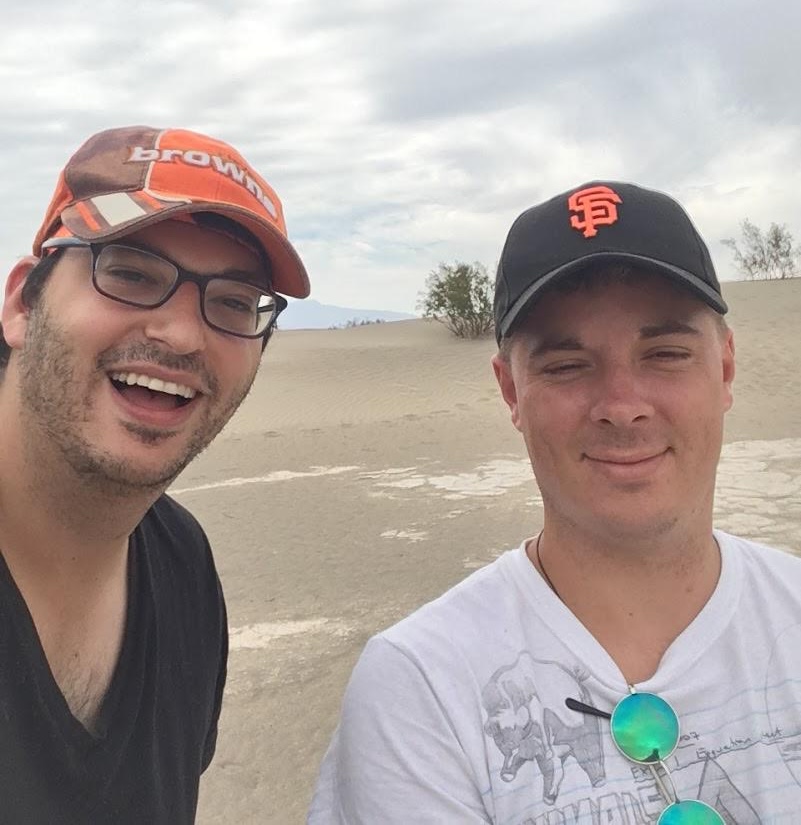
Our contrasting interpretations of McCandless’s journey threw our philosophical differences into sharp relief. I viewed McCandless as a tragic hero I could identify with: a young man of letters who was willing to surrender everything and devote himself completely to self-realization. The tragedy was that he attained the wisdom he sought but never made it home to share it with the world and the people who loved him. Micah saw it entirely differently. To Micah, McCandless was “a really smart dumb guy” who read a lot of cool books and memorized inspiring quotes but was essentially a fool who didn’t realize how lucky he was to have people around him who cared for him. It was classic Micah: sharp, funny, slightly deflating, and, as I would come to understand years later, profoundly wise.

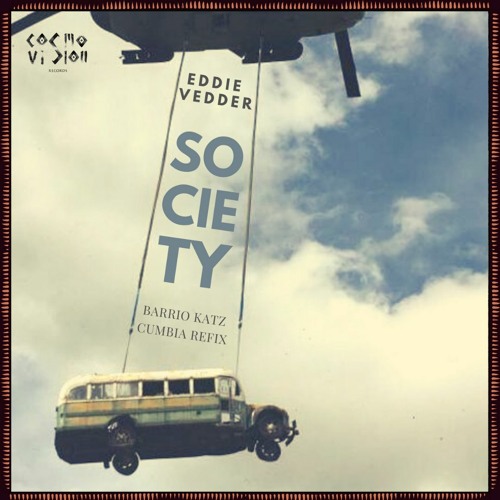
Our truce over this disagreement came in the form of parody. Eddie Vedder had contributed a song to the film’s soundtrack called “Society,” and Micah’s exaggerated impression of Vedder’s drawling delivery – “Suhhh-siii-uhh-tayyy”- left me in tears the first time he did it. It became our running joke for the remainder of Micah’s life, an inside laugh that contained within it the entire philosophical argument, compressed into a few absurd syllables.
At the time, I was in a place in my life where I was still desperately striving to break through creatively. If I’m being honest, Micah’s reading of McCandless triggered me. It felt dismissive of the spirit of adventure that had always animated me. So I resisted it. Shortly after that trip, I sold most of my possessions, quit my cushy job, and moved to Reno to immerse myself in a screenplay in true McCandless fashion. Micah went back to Los Angeles and continued to tinker with his endless experiments in comedy: the AI comedy robots (Fartificial Intelligence anyone?), performing in Edinburgh, launching podcasts and YouTube series, and to enjoy his life with Cecily. His approach seemed decidedly more domestic than mine, and at the time, I wasn’t ready to understand the wisdom in that.
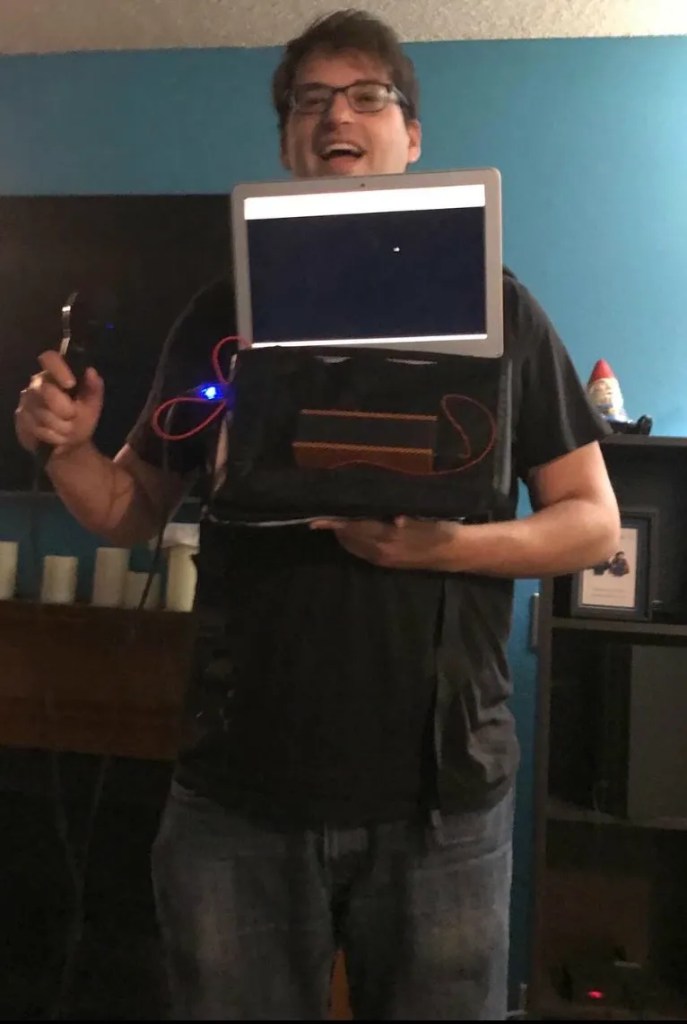
Six years later, in 2023, Micah and I reunited for what I’ll call a purposeful inner journey we took together. At that time, I had a strong sense that I was on the verge of my creative breakthrough and had been wrestling with the concept of masks—the personas we wear to channel our power and protect ourselves from the world’s slings and arrows. I was thinking about performers I admired, like Bob Dylan and Mick Jagger, who seemed to wear masks that channeled their authentic selves while shielding whatever threatened to tear them down. I had been diving deep into Joseph Campbell’s work on this theme, looking at artwork and photography, trying to understand how I might craft a public identity that would give me the strength and courage to bring my creative work into the world.
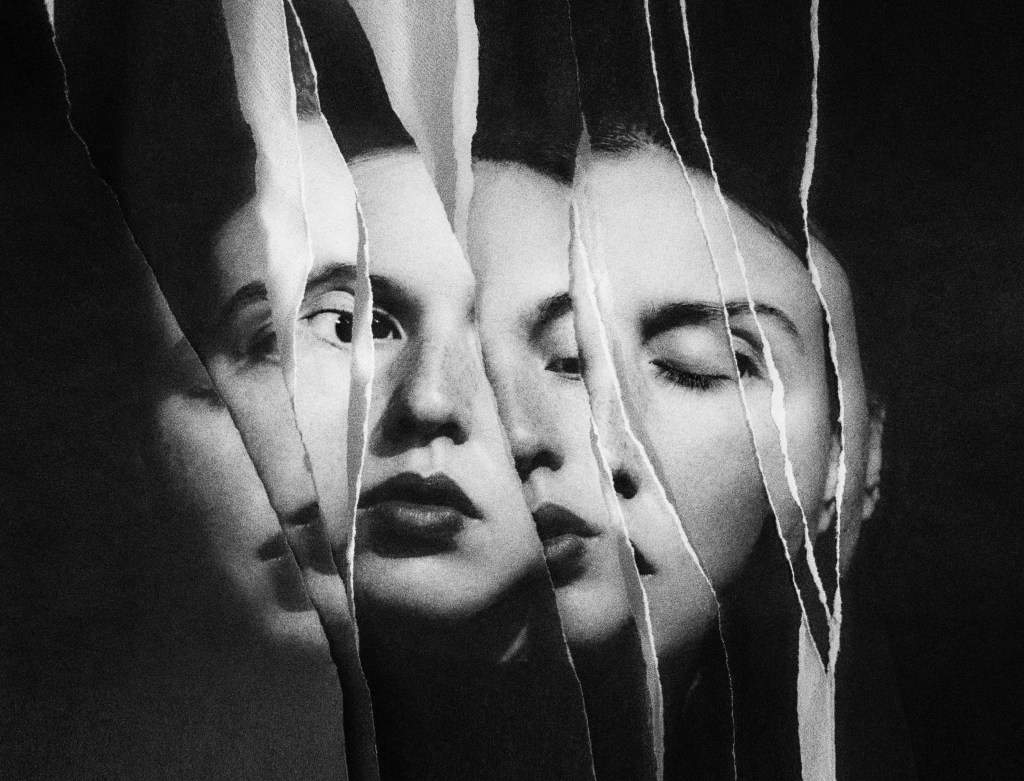
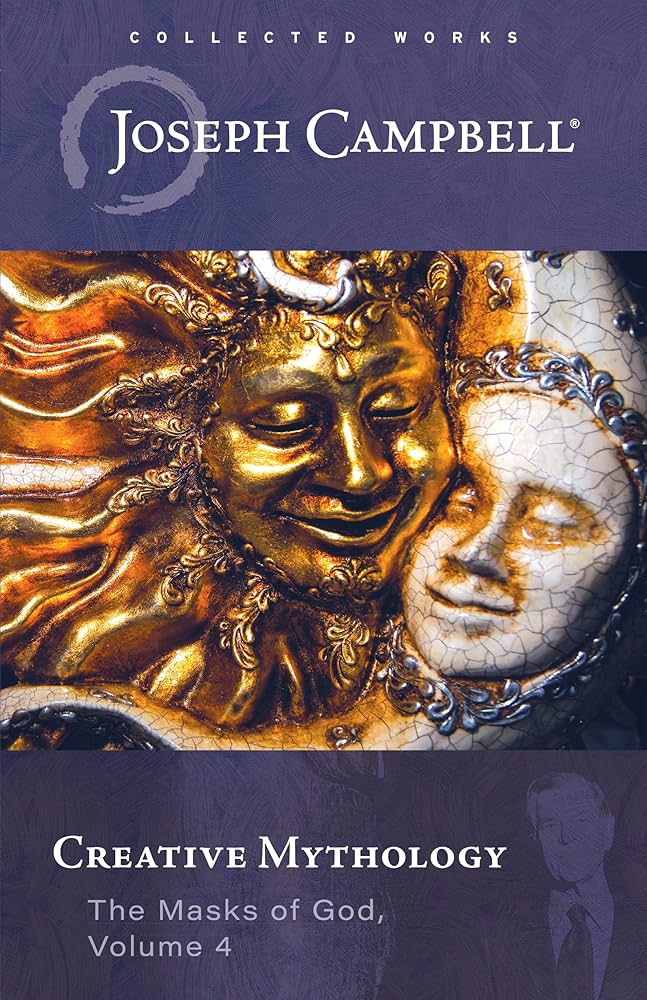
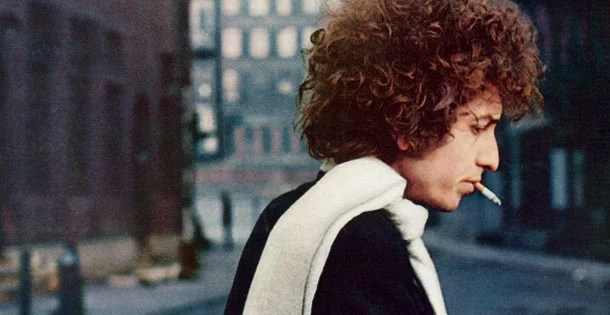
During our journey, the theme surfaced in ways I hadn’t anticipated. At one point, I put on a jacket, a Ben Hogan hat, and a pair of funky vintage sunglasses in order to, as I explained, “look normal and inconspicuous.” Micah laughed and lovingly pointed out the sheer absurdity of my attempt at normalcy resulting in such a comically bold and conspicuous appearance. My personality couldn’t escape my fashion choices, and Micah delighted in this. It made me think: perhaps there were masks I’d been wearing unintentionally; masks that were blunting my light rather than enhancing it. That evening, in a moment of deep and quiet reflection, I arrived at something I hadn’t expected to find. I realized that the masks I’d been wearing for most of my life weren’t worn to channel power at all. They stemmed from a deep-rooted feeling of not being enough-imposter syndrome writ across an entire identity. And in that realization, a familiar question suddenly hit with the weight of revelation: What if I really am enough? What if I took the mask off instead of looking for a new one to put on?
Micah made me feel safe in taking my mask off. He was a kind and steady witness, and he was genuinely shocked to discover that on an emotional level, I didn’t actually believe I was intelligent or talented. He connected the dots for me in a way that no one else had. I didn’t have to strain. I didn’t have to wear masks. I was already enough. And it was in that realization that the six-year-old philosophical argument that had begun in Pahrump finally resolved itself. I finally understood what Micah had been trying to show me in his critique of Christopher McCandless. Sometimes taking on some grand adventure comes from believing that what we already have and who we already are isn’t enough. Sometimes the bravest thing isn’t to go, but to stay, and to see clearly what’s already there.
In the last exchange I had with Micah in the hospital, I reminisced with him about some of these experiences and told him, “You helped me recognize some things that seemed small at the time, but turned out to be big.” Without missing a beat, he looked me right in the eye and in a flash of lucidity replied, “I agree. I feel the exact same.” I played “Society” on my phone, and we enjoyed one last rendition together.
“Suhhhh-siii-uhh-tayyy.”
Here is the thing I wish I could have made Micah understand, the thing that sits heaviest on my heart now that he’s gone: the gift he gave me-that profound ability to believe in the people he loved, was one he often struggled to give himself. Micah helped me find a sense of belief in myself that I had been searching for, but for himself, that belief wavered. He could see the genius and the goodness in others with such piercing clarity, but when he turned that implacable lens inward, the world’s injustices seemed to loom larger than his own remarkable light. He worried that the fix was in, that the algorithms were rigged, that the gatekeepers couldn’t see what he had to offer, that the breakthrough he deserved as a comedian would always be just out of reach. And to a degree, I understood his frustration, because I genuinely believed he was extraordinarily talented and that more of the world deserved to share in his gift.
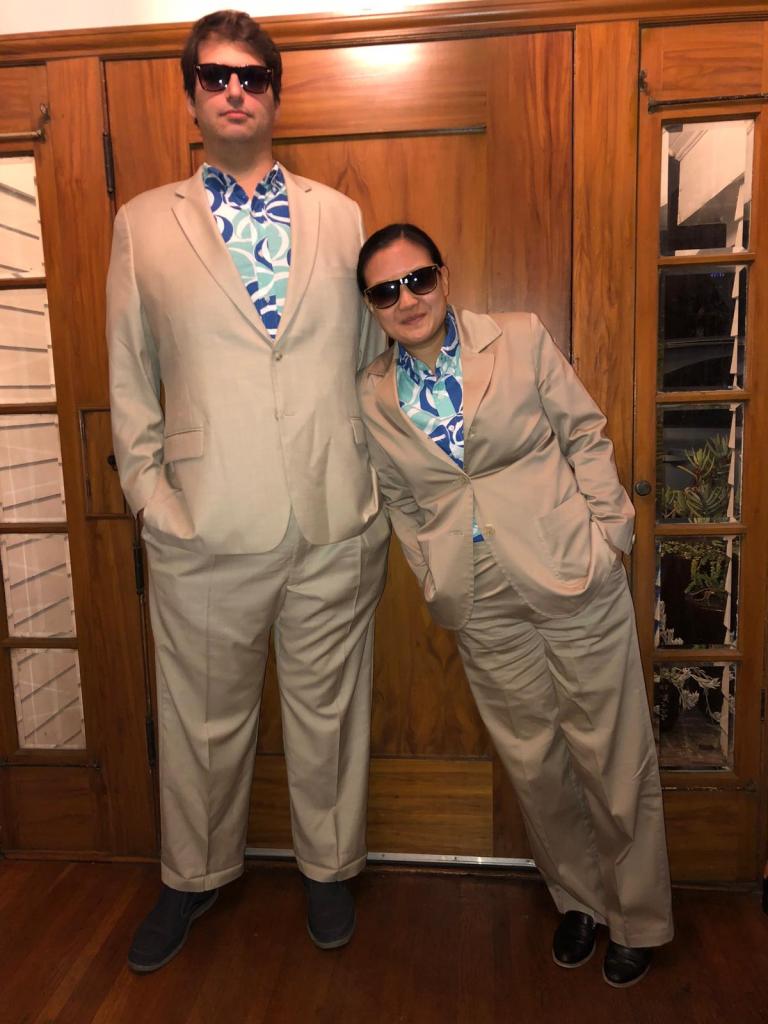
But I wish he could have pulled a Tom Sawyer and attended his own memorial service. I wish he could have stood where I stood at Mount Sinai Memorial that day in Simi Valley and seen the scores of people who came from all the different chapters of his ever-evolving life to grieve him under that open blue sky and rolling hills. I wish he could have heard the way almost the entire congregation was sniffling and sobbing through every single speech. I wish he could have seen the full scope of the life he actually built: a loving wife who adored him, a daughter who will carry his brilliance forward, a community-run comedy club where he poured his heart into helping other comedians find their voices, building AI tools to help them improve their sets, staying late, doing extra work for free because he loved comedy and he loved the people who practiced it. A career as an engineer and technologist. Friends who texted him at two in the morning about evolutionary psychology and the meaning of dorkdom. A life so rich and so full of love that it overflowed the grounds of a memorial park, and well into the night back at the good ol’ Brass Monkey. I wish he had lived long enough to see how rich he really was. I believe that if he could have truly taken his own advice and turned that extraordinary capacity for belief inward, the way he turned it outward toward Cecily, toward me, toward every comedian who graced his little stage, then the blessings would have been fully realized the way he truly deserved.
Maya Angelou once observed that people will forget what you said and forget what you did, but they will never forget how you made them feel. Micah and I resonated strongly with that idea, but I also think the full truth is a little more layered. If we quiet our minds and look closely, we can trace the specific impressions that the people we love made upon us-the way those impressions bent the trajectory of our lives and shaped who we became. Like inferring the existence of distant planets from the way surrounding bodies move through space, or unearthing the ruins of ancient civilizations through patient excavation, the evidence of Micah’s impression on my life is everywhere I look.
Since that journey we shared, I did finally make my creative breakthrough via my screenwriting, broadened my sense of identity, am blessed with a great community around me, and am well on my way toward making my own peculiar dent in the universe in my own particular way. All of this flows, in no small part, from what Micah gave me: the permission to take off the mask and the assurance that what was underneath it was more than enough.
Thank you, Micah. Thank you for your laughter, for your honesty, for your brilliant and relentless mind, for your generous heart. Thank you for believing in me when I couldn’t believe in myself. Thank you for being the Full Dork that you were, unapologetically, all the way to the end.
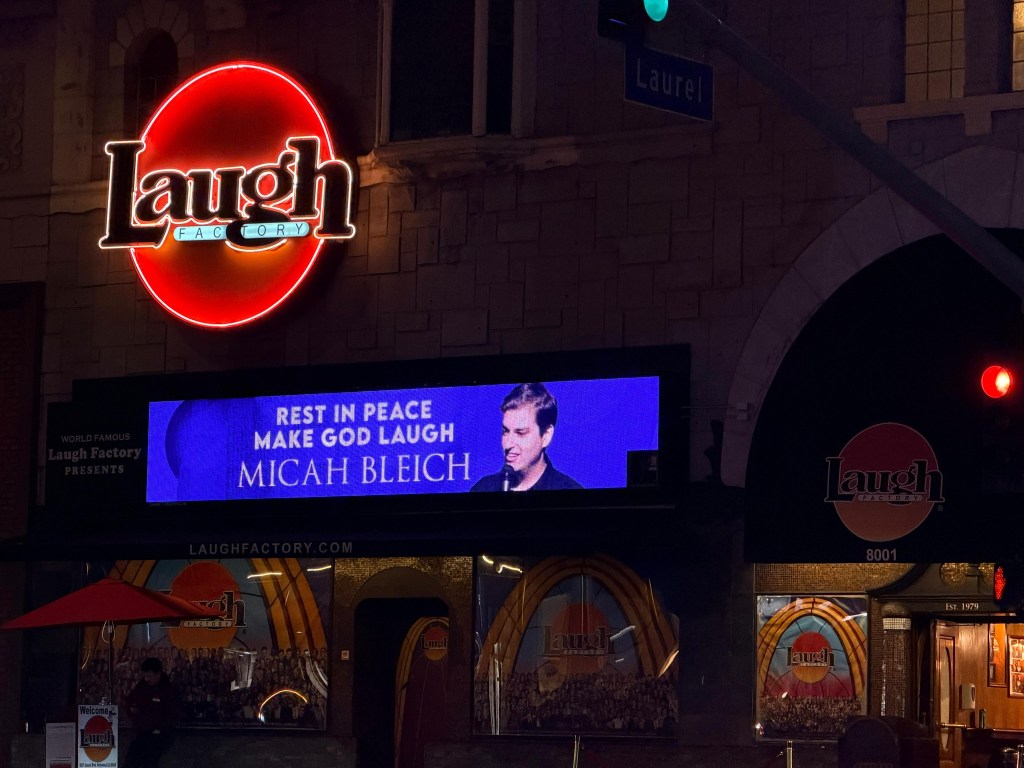
I love you, my friend. I only hope I was able to give back to you some of what you so freely gave to me.

 Grahamblings
Leave a comment