This story was written in 2017 for David Mamet’s Masterclass.
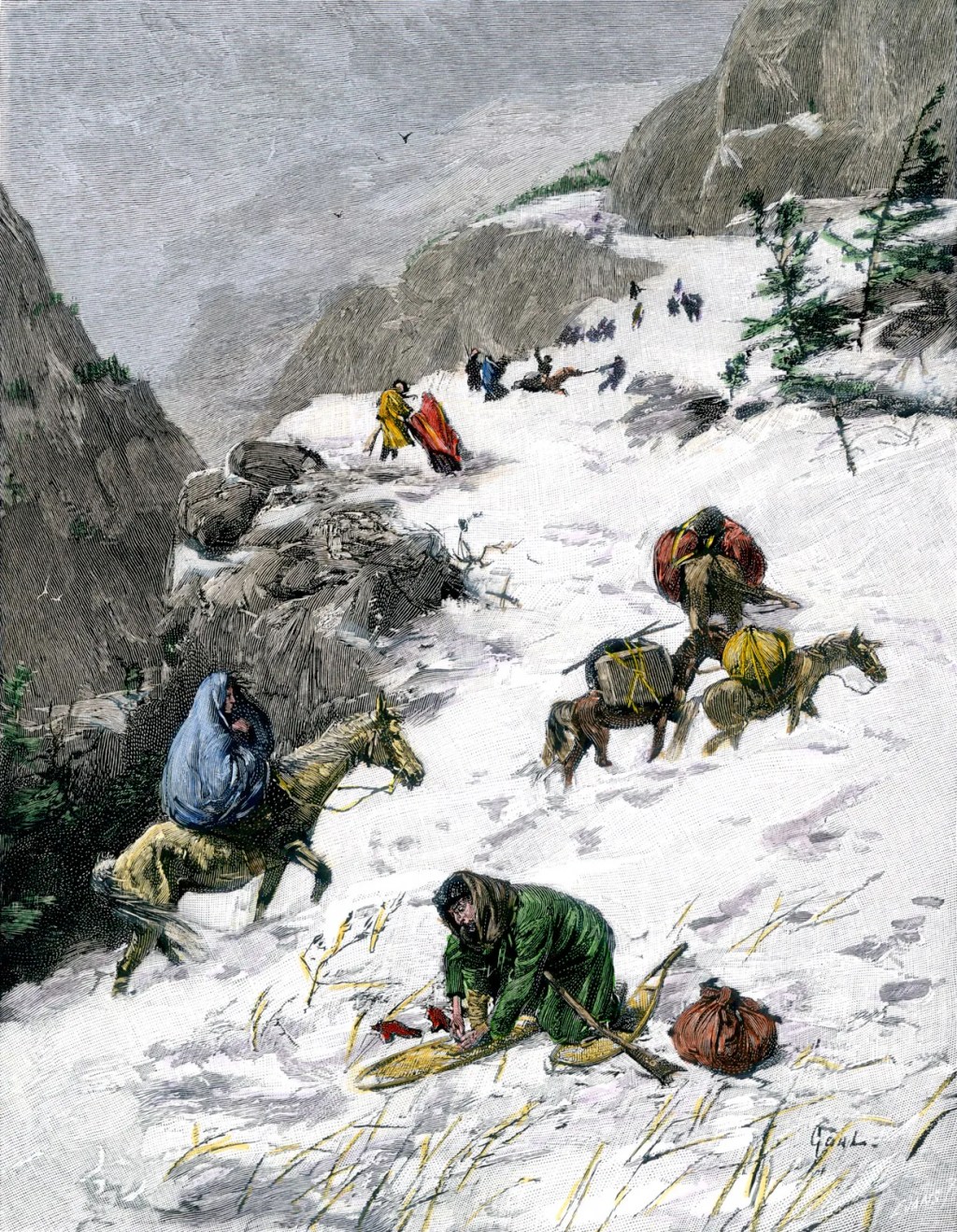
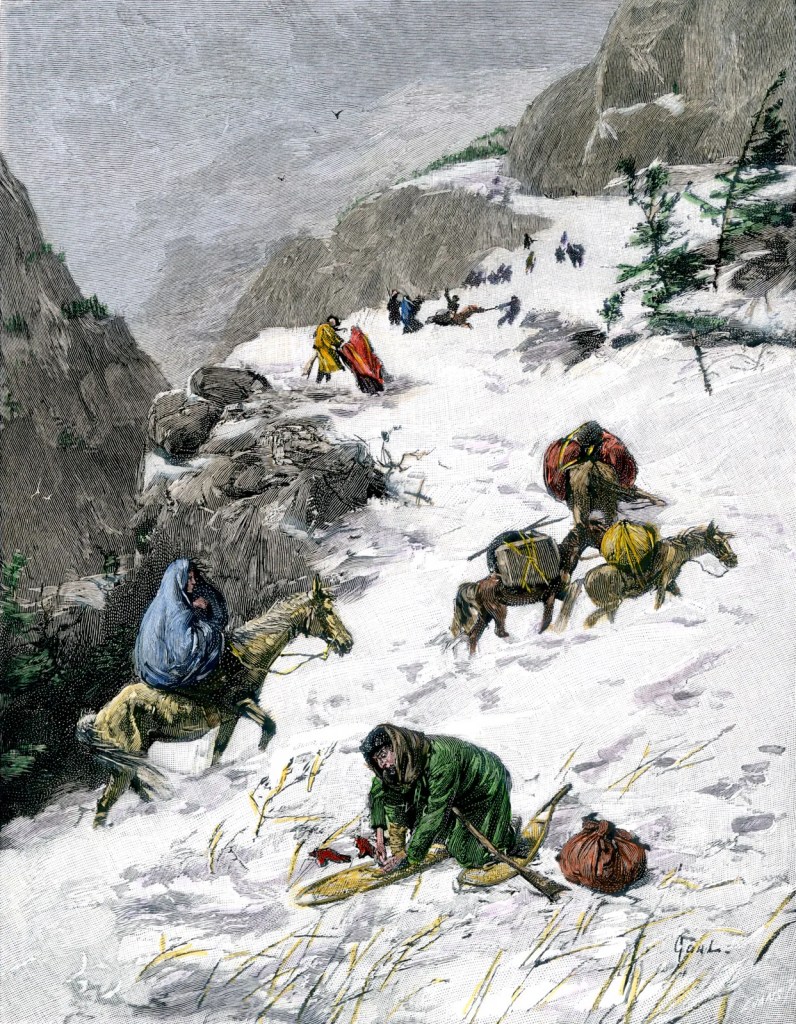
Why don’t y’all sit a spell while I tell ya about the night I discovered what bein’ a man is all about? By the reckoning of the clickbaity title to this’n here story, y’all might be figurin’ on a hot ‘n steamy erotic yarn. But truth be told, it’s about as far from hot ‘n steamy as it gets. In fact, the events of this mini-saga unfolded on a cold, bitter winter night on Donner Pass over 160 years after a group of pioneers got stuck in the same spot and resorted to eating each others’ neighbors and wives to stay alive. Although my road of trials wouldn’t prove sufficiently dire to justify sinking my teeth into human flesh, it felt comparably significant in the drama of my untested, post-adolescent mind.
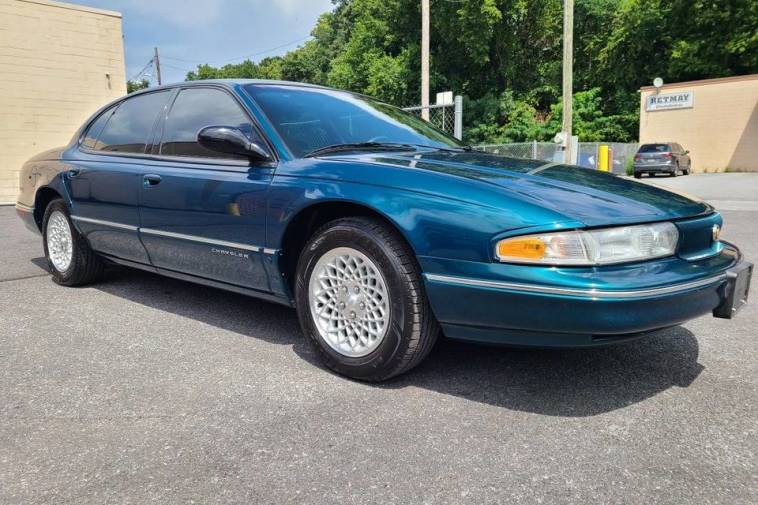
Before we get into the meat of this momentous mountain myth, let’s take a step back so I can introduce the two chief characters: me and my faithful vessel for this voyage, the Sturgeon. The Sturgeon was what you might call a “dead old man car.” And no, this grim moniker isn’t a folksy metaphor but a literal description. It was a turquoise ’96 Chrysler LHS that belonged to my old man’s old man. As a child of Ken Kesey and the Grateful Dead, my dad had a complicated relationship with transportation machines (among other petty earthly, material concerns), contemptuously neglecting them yet never missing an opportunity for a stylish upgrade. So when my grandpa passed, my dad used some of the handsome sum from the inheritance to fix himself up with a brand spankin’ new hybrid and kicked the Sturgeon down a generation to yours truly.
Although it felt understandably macabre driving my dead grandpa’s hand-me-down sedan around campus in my early broke college boy days, I soon discovered that we seemed to occupy the same existential paradox. We were both old souls in an environment dominated by youth and hermetically sealed in our inexperience in a culture of playful experimentation. You might say the Sturgeon and I both had very few miles on our odometers. Most of the Sturgeon’s life was spent gathering dust between geriatric newspaper runs down the driveway, while most of my life had become unwittingly secluded from the typical revelry and hedonistic exploration of college life. My tendency to avoid human contact whenever possible seemed to come from some alien proteins hijacking my limbic system, which I refer to as emotional autoantibodies. These emotional autoantibodies attacked potentially positive human interactions just as viciously as threatening ones because they both posed threats to the cold, emotionless stasis I clung to for dear life.. This socially maladaptive was apparently so obvious that my dormmates felt compelled to intervene by plastering my room with pornographic images and confronting me about my drug of choice: isolation.
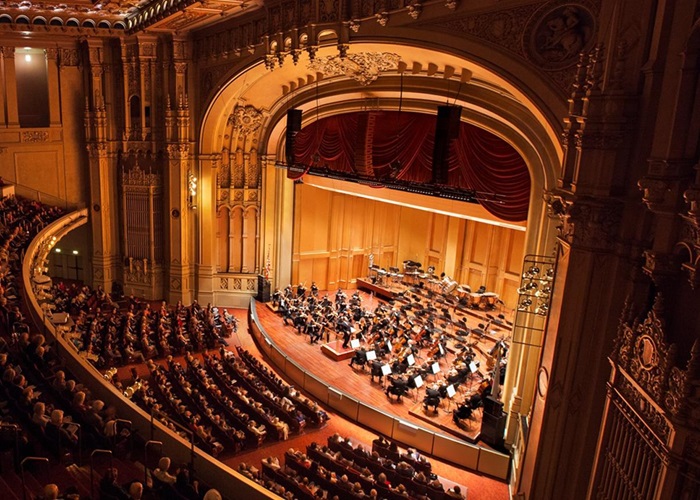
This ingrained pattern was on full display about two months before the night the Sturgeon and I traversed the Donner Pass when I had inexplicably found myself alone in the company of a young woman. After attending a symphony performance together, I told her about my odd habit of driving out to the country, away from the light pollution, to escape and reconnect by looking at the stars. Perhaps even more inexplicably, she seemed charmed by this odd habit and insisted I introduce her to it. So we headed due east from San Diego toward Palomar Mountain, parked in a secluded driveway, and laid back on the hood of the Sturgeon. It was like a scene from a movie with tensions mounting as the male and female protagonists bond over poetry and life. In the throes of this seemingly scripted moment, shooting stars streaked across the sky – I shit you not! Naturally, we reached the beat in the script where the female protagonist gives the male protagonist a long, meaningful look, but alas, I missed my cue. The emotional autoantibodies kicked in in full force; I went into a mild panic and told her we should call it a night. In the heat of that moment, I didn’t know if her heart-melting gaze could be trusted. I wanted to trust its beauty and purity, but a little demonic voice in the pit of my reptilian brain wouldn’t let me. What if she was using her charm and pheromones as a kind of weaponized drug designed to compromise my faculties so she could hurt or humiliate me later? I was used to hearing this voice in situations where I was in danger of actually living my life, which had left me a stranger in a strange world and untested until a fateful winter night.
It was on holiday break, and the Sturgeon and I were making our first big trip together from the mild, sunny streets of La Jolla all the way up to Sparks, Nevada, a suburb of Reno where my old man had settled. We had put the first eight and a half hours of the drive behind us without much trepidation, but as we were chugging up the Sierra Nevada mountains, the temperature dropped below 0 Celsius, condensed air mixed with water molecules at high altitudes, forming a crystallized substance that fell from the sky; a substance that was quite strange and foreign to this California boy; I believe “snow” is the colloquial term. At first, the snowfall was light, creating picturesque tableaus on the tree-lined slopes, but the scene turned ominous as the snow came dumping down in increasingly dense volumes. The rear-weel drive Sturgeon began to struggle to maintain traction and visibility as we inched up the mountain, and I soon discovered that our good friends at the California Department of Transportation had some laws on the books to prevent greenhorn city slickers like the Sturgeon and I from being a menace to society, namely, snow chain control. For my fellow ignorant fair-weather urbanites out there, chain control is a roadside checkpoint where your vehicle is inspected to ensure you’ve got chains wrapped around the two tires that receive power from the transmission (unless you’ve got a four-wheel drive). As you probably surmised, I was not in possession of chains for the Sturgeon, and I was forced to stop at a quaint mountain gas station. The spot was the Mos Eisley Cantina of the greater Truckee area, with its eclectic band of scraggly travelers that included everyone from grizzled veteran truckers to yuppie ski-trip families to displaced gamblers taking refuge in the warmth of the mini-mart. As I joined them, I felt a little like Luke Skywalker crossing over into a strange, new, and dangerous realm of the unknown.
As it so happened, the act of crossing that threshold to the unknown seemed to trigger a series of trials that presented direct challenges to the core weaknesses that belied my emotional autoantibodies. The first of these trials occurred when I attempted to purchase the state-required chains. Apparently, this hole-in-the-wall establishment had cornered the market on pawning off marked-up chains to ill-prepared tourists such as myself, and I was about five bucks short with proverbial moths in my bank account. Dead broke was my default mode of existence during my early college days. After suffering the humiliation of coming up short with the cashier, I attempted to remedy the problem by taking the path of least resistance: calling my dad to bail me out. This forced me to confront my extreme fear of asking for help in any form, especially from my dad. I swallowed my pride and made the difficult phone call to admit that I couldn’t quite make it to Sparks on my own, but the strategy proved to be predictably unsuccessful. Although my old man had recently inherited a small fortune, he still didn’t believe in credit cards, and he wasn’t about to drive up the mountain just to spot me five bucks, so he instructed me to negotiate for the chains. This made my stomach sink, but there was no turning back at this point. All I had left was the Sturgeon and the forty bucks in my pocket, which wasn’t enough to get me anywhere else. If I was going to get out of this place, I was going to have to relinquish my patterns of avoidance and immature dependency to face down the elements and my fears on my own. What a strange and exhilarating new realm this was, indeed.
I had no choice but to accept the fact that my next trial was to take my dad’s instruction and attempt to negotiate with the cashier, which required facing something I avoided at any and all costs: confrontation. It seemed plausible that the cashier was also the owner, so I slinked back as my emotional autoantibodies kicked into high gear with my heart nearly beating right out of my chest. The well-rehearsed rhetorical masterpiece I had crafted in my head to plead my case spewed out of my mouth as an incoherent, nerve-riddled cacophony of word salad, which seemed to melt the cashier’s heart a little. It was pity rather than charm that had the intended effect, and I got the chains for the cash I had in my wallet. Phew. Now all I had to do was get the damn things on the Sturgeon.
Installing tire chains probably sounds like a trivial task to you since rudimentary mechanical procedures are an afterthought for the majority of the adult population. Well, they’re not for me. Not by a long shot, okay? I was the guy who turned an Ikea desk with kindergarten-level instructions into a Picasso, so putting chains on two tires at night in a snowstorm proved to be a Herculean task for me. This trial was about having it out with my rather emasculating mechanical ineptitude. Sure enough, after rolling out the chain behind my rear tires and going through an extended series of trial and error to find the sweet spot, the process of securing the chains was an agonizing chore involving the intricate coordination of what seemed like a complex web of hooks, knobs, and fasteners. Even the simple act of latching the hooks to the side cables was hell for me. Do it with my gloves on, and I couldn’t curve the hooks at the right angle. Do it with my bare fingers, and the freezing cold latches dug into my skin, but I had no choice. Every molecule in my body longed to surrender to the kindness of a stranger with a couple ounces of worldly common sense to bail me out. Undoubtedly, such a savior could hook these goddamn chains up in about thirty seconds, but alas, this liberator was not to come, and I sure as hell wasn’t asking for help again.
I toiled with the chains for nearly an hour and my mind drifted away from the task at hand. This struggle wasn’t an isolated event anymore. It was the dominant narrative of my life: constantly struggling with earnest tenacity just to accomplish what others seem to be able to do effortlessly and still coming up short. This arduous task transformed from a trial of my mechanical acumen to a trial of my mental strength and fortitude, and it wasn’t going so hot. My self-defeating ideation spiraled until I was so physically and emotionally exhausted from the compounding effects of the long drive and all my trials that I finally lost control and surrendered to my emotions. I quarantined myself in the Sturgeon and burst into tears for the first time in years. And in my tears, I had opened a trapdoor in the bowels of my warped mind that reeked of decomposing carcasses and burnt rubber. In my emotional surrender, instead of recoiling or slamming the door shut, I let the flood of repressed memories and hidden emotions burst forth and wash away the raging flames of shame and frustration like holy waters. It was a truly cathartic moment that left me in a state of blissful focus, ready to tackle the task at hand.
With the familiar voice of unreason dimmed, I was able to recognize that there was more light under the station forecourt than my secluded parking spot, which might come in handy for the whole enterprise of, you know, seeing what the hell I was doing. Sure, it meant being subjected to a more public display of my ineptitude, but I proceeded with my chain-fumbling under the warm forecourt light. Although the task was still challenging for me, a Buddhist might say that the tires and chains were now devoid of their essence; in their case, an essence of contemptuous superiority. The chains were just chains – back in their proper state of śūnyatā. With the extra physical and mental light, I somehow managed to secure the chains (as far as I could tell). I just kept my fingers and toes crossed that my tires wouldn’t explode somewhere out in the icy tundra.
Just as I was wrapping up the installation, I was caught off-guard by a strange rambler who had drifted into my orbit. He was a gaunt middle-aged Black man who looked like he had just wandered out of a Mad Max prequel in a fur aviator hat and fingerless biker gloves.
“Where ya headed?” he inquired.
“Um, Sparks…” I tentatively replied.
“You passin’ through Reno then?”
“Yeah, I guess.”
“Mind if I catch a ride? My bucket is busted, and I got a woman waiting for me down there in Reno. You know how that goes.”
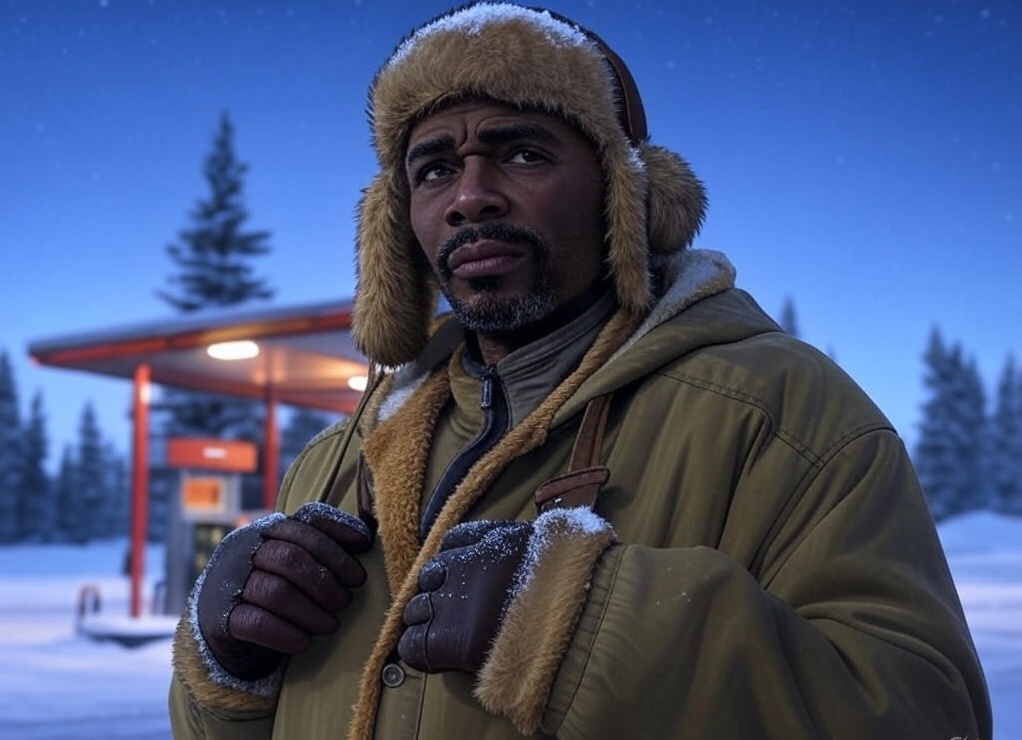
In truth, I had no idea how that goes, but I was caught off-guard by his honesty and directness. Typically, my emotional autoantibodies would have overwhelmed my empathy, and I would have come up with any excuse to say no. Putting my neuroticism aside, in this case, there was actually a small legitimate risk to offering a ride to a total stranger, particularly in this dark, frozen wilderness; my fate might not be so different from the Donner Party after all. But in my fleeting state of bliss, I somehow felt it was my duty in these challenging circumstances to be my brother’s keeper for this stranger in an aviator hat, just as the cashier had been my keeper cutting me a break on the price of the chains. In Mr. Aviator’s appeal for help, I saw my next trial as a test of my capacity for compassion and trust, so I agreed.
And so it was that this shy, maladjusted, broke college boy drove off alone with the enigmatic Mr. Aviator into a snowstorm in the untested Sturgeon with questionably installed tire chains. The voyage into the abyss began smoothly enough: Aviator and I made small talk, the snow was falling gently, and the Sturgeon’s tires didn’t explode. What more could I ask for? It turned out that these idyllic conditions were not my triumphal procession from a long, arduous journey but the eye of the storm.
As we reached the summit, the snow and the wind swelled as if the tormented spirits of the mountains were stirring. These spirits raged until the Sturgeon was completely enveloped in a white blur, like the static on a vintage TV. I didn’t know the technical definition of a blizzard, but if you asked me to describe one, this was it. When it got to the point where I couldn’t see more than five feet in front of me with the wipers and defrost on full blast, I panicked, went into pure survival mode, and pulled over to what I believed to be the side of the road. When I looked over at Aviator, to my astonishment, he was asleep! I guess the trust cut both ways. So there I was, trapped in a goddamn blizzard, surrounded by walls of snow on all sides with another human being’s life in my hands. I quickly recognized that staying put would likely result in the Sturgeon’s wheels getting buried in powder, so there was no other option – I had to press on. My final trial would be to confront the vicious elements, and for the first time, face the most primal of fears in a very real and direct way: the fear of death.
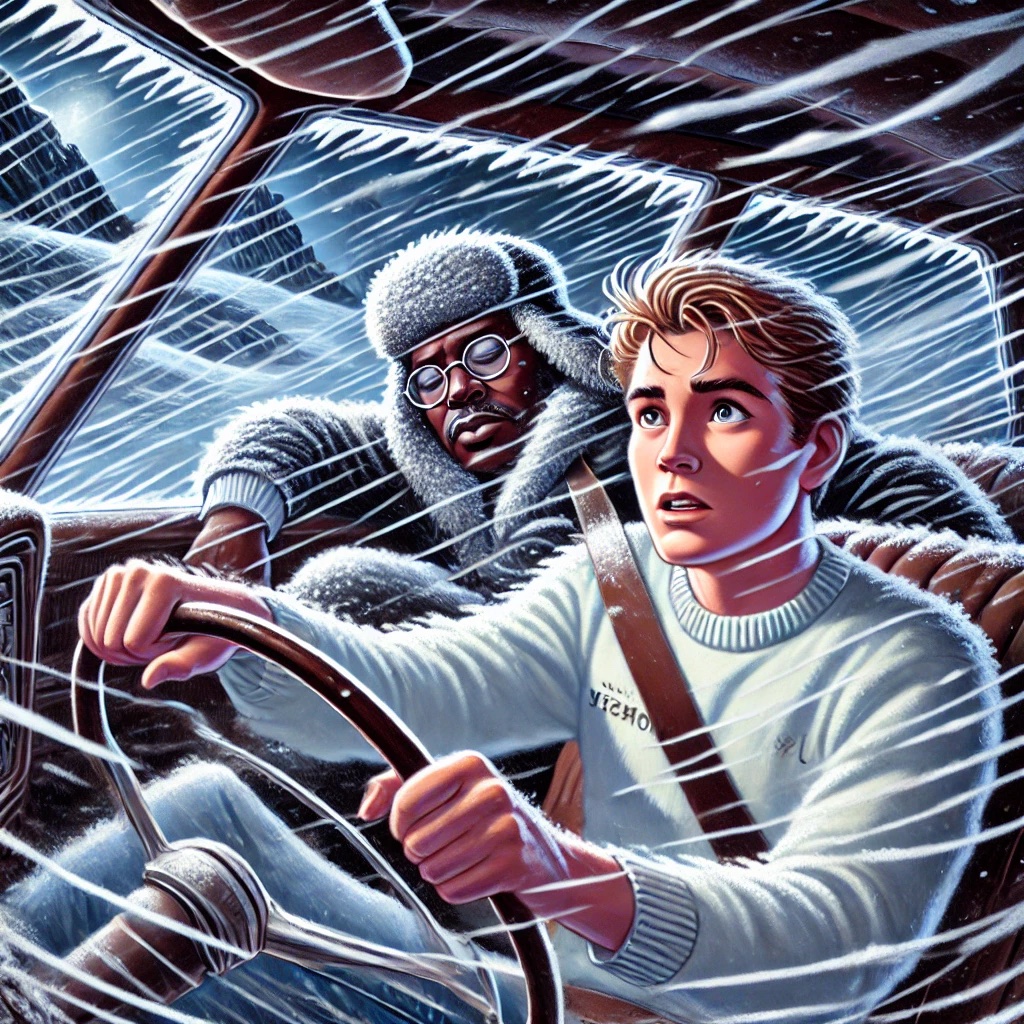
As I pulled back onto the windy mountain highway, the blinding whiteout quickly triggered my amygdala, flooding my psyche with a rapid stream of anxious thoughts. “Are we going to make it to Reno alive?” “What if there’s an avalanche?” “What if the Sturgeon breaks down?” “I’m too young to die! There’s so much I still have to accomplish!” “I can’t get this stranger killed!” “I can’t die a virgin!” “I wonder how long it’ll take them to find and positively identify our corpses if we fall off the mountain?” I soon recognized that this channel of thoughts was just useless white noise about things I had no control over. With this recognition, my mind was somehow able to tune into another channel, like the signal on a radio crystallizing as it’s tuned to a new frequency. The thoughts on this channel were slower, quieter, and calmer. “Take it real slow.” “Use the reflectors on the center divider to maintain orientation.” “One turn at a time.” I discovered that the more I was able to tune out the doom and gloom channel in favor of the “task at hand” channel, the more I was able to cope with this dire situation. The undertaking was no longer in God’s hands where I was at the mercy of a myriad of circumstances that I had no control over, but in my own hands. Survival was a simple question of my own ability to keep the road markers in my cross hairs, to maintain traction as I took a decreasing-radius turn, and to make it from one exit sign to the next.
By the time the shift in channel of thoughts was total, I was not only coping but thriving, empowered by a lightning bolt of manic exhilaration. I was no longer shy, meek, awkward, underdeveloped Graham, I was Tiger Woods heading into the 18th hole of the Masters with a two stroke lead. I was Lieutenant Dan screaming defiantly at the raging storm in the middle of the ocean, “You call this a storm?!” I was the stuff of myth and literary legend like The Old Man and the Sea. Rather than hauling a legendary marlin through the ocean while it got ravaged by sharks, I was hauling the Sturgeon through a mountain while it got ravaged by a merciless explosion of snow. This was a side of myself I had never seen before; a dormant power from deep within that I didn’t know existed. Perhaps we find out who we really are when we make the excursion through the thickest of storms.
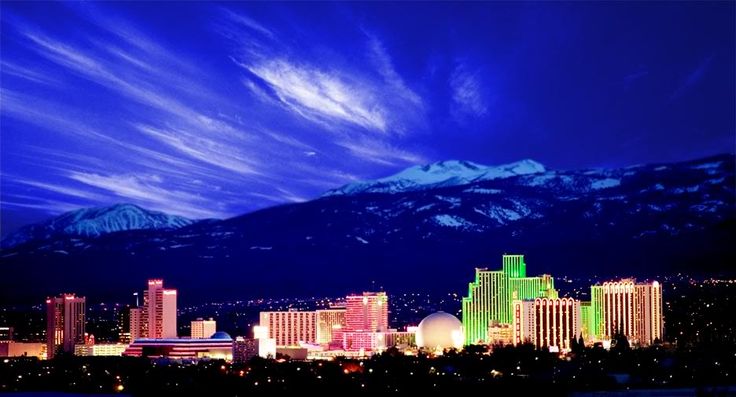
This euphoric rapture carried me through the entire descent just past Verdi, Nevada where the Gods finally seemed to smile on my courage and faith. Like a plane pulling away out of severe turbulence into clear blue skies, the Sturgeon cleared the howling winds and blinding blizzard, breaking through to a quiet so serene that I could all I could hear was the gentle hum of the engine and a sky so crisp and clear that a familiar neon beacon glimmered like the wings of an angel: Reno, Nevada. There it was with the lights from the lines of its casinos glowing like the Christmas tree in Times Square. It was in this moment of tranquility that Aviator finally woke up.
“We there yet?” he asked as he rubbed the sleep out of his eyes.
I almost had to bite my lips to keep myself from bursting out in laughter at the glory of his ignorance.
“Yeah, we’re there” I replied.
With that, Aviator directed me to his lady friend’s apartment in downtown Reno, he thanked me, and we went our separate ways. I don’t know which way Aviator’s life skewed after that because I never saw him again. It’s funny how sometimes the only witness we have to the most momentous junctures in our lives is a complete stranger. When I finally arrived at my old man’s digs in Sparks in the wee hour of the morning, I was a man for the first time. To me, being a man didn’t mean that all my angst, frustration, and fear were eviscerated. Abject terror is still a fixture in my life to this day, and I don’t believe that fear can be vanquished. For me, being a man means being capable of altering my relationship with fear and all the other emotions I had relegated to the murky swamps of my subconscious mind. Indeed, being a man means knowing that the finest treasure in life tends to wrap itself in the veil of fear, and that the full range of my emotions, from anxiety and despair to exuberance and joy play important roles in reshaping my relationship with fear. After all, I had traversed through humiliation, crippling insecurities, pride, social paranoia, and a blizzard and came out of it feeling better than I had in years. The whole experience made me wonder what else I was capable of.
The next day, I picked up my phone because I had a call to make to a certain someone that I had unfinished business with: the symphony girl.





Leave a Reply