Written in November, 2023
Falling in love is funny. When we fall in love with someone or something, the object of our love constellates all of our devotion and life force energy. These things become the stars at the center of our existential solar systems and bring meaning and order into an otherwise cold, random, and chaotic universe. And yet, from the outside looking in, our devotion to the people and things we love often looks absurd, even comical. We’ve all been in this position: rolling our eyes at that insufferable young couple in line at the movies that Eskimo kiss while incessantly drowning each other in nauseating pet names and sweet nothings, fighting to maintain consciousness as our dear friend shows us her trading card collection for the eighty-seventh time with her usual Churchill-esque elocution, or looking up in perplexed wonder as a man spends thirty-three years sculpting a collection of towers from scrap metal. Indeed, the reasons behind these seemingly quixotic expressions of love are generally invisible to the outside observer. Even when we find ourselves enveloped in the radiant tractor beam of our own passions, our impulses seem to exist in a domain beyond reason. We act on our love simply because we have to. I like to believe that by zooming in on the tiny sliver of the universe that has enchanted us most, in some way, its deepest mysteries are revealed to us. In this way, love is the skeleton key that unlocks the very secrets of being. And in wielding that key, we are transformed ourselves.
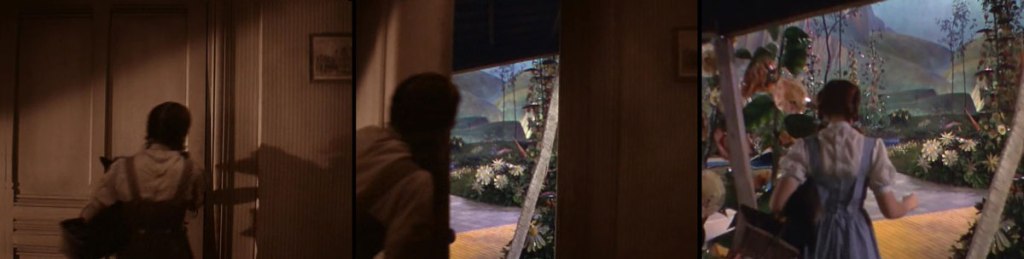
The deepest and most consistent love in my life has been cinema. My earliest memory is being parked in front of the tube as an infant, watching my first movie, The Wizard of Oz. Although I didn’t have language or concepts, it spoke to me. My consciousness exploded into being as I was whisked away to a place that was strange yet somehow familiar. There was a profound mystery at the center of that film that I was intensely drawn to. Ever since I heard the siren call of Lady Cinema that day, I have walked a circuitous path in pursuit of that mystery with no compass or roadmap other than the ones written in the stars. This journey has led me to fumble haplessly around chaotic movie sets as my financial and personal life disintegrated into obliteration, log endless hours in the sanctuary of books in search of an answer to one of a billion questions and movie palaces in search of the grace to keep moving forward, write thousands of pages that will never see the light of day, upend my life so I could see it from a different point of view, meditate in the desert for days, chase flying saucers, and be driven to the brink of madness time and time again. In the throes of all this bizarre behavior, compelled semi-blindly by this ineffable yet incandescent love, I couldn’t help but ask myself from time to time: what the hell is this all about?
Perhaps it is folly to ask such questions. And perhaps, in the end, the answers can either be reduced to neurochemistry and Freudian psychology, or they are so vast that they are beyond human comprehension. Regardless, it is human nature to question and create structures of meaning, and I don’t believe that inclination should be dismissed. It has been my experience that questioning why I love cinema and what it means to me has not spoiled the charm of that great mystery at the center of it; rather, it has deepened it. This feedback loop of continuous questioning and deepening has led me to a set of guiding tenets about how this bewitching art form should be approached and understood. What follows is a brief outline of those guiding tenets, which I humbly share in hopes of finding allies who have come to a similar understanding of cinema and its role so that we might walk hand-in-hand in our cinematic quests. It occurs to me that these claims may be so self-evident that they don’t require this kind of articulation, but I’m willing to be a fool for the love of Lady Cinema, so what the hell, here it is.
Cinema is the Language of Consciousness
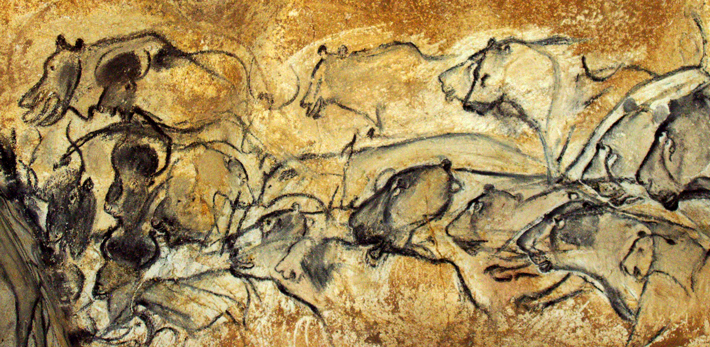
The first filmmakers walked the earth tens of thousands of years before the likes of Georges Méliès and the Lumière brothers. They etched their dreams and visions upon the faces of caves that were cast into motion by the flickering shadows of firelight. Ever since that time, man has continued the ritual of interpreting and sharing his experiences to understand higher levels of reality and his place in the world. It is through the act of articulating and sharing our experiences and collective dreams that we evolve our consciousness over time. This will to consciousness is our most singular, meaningful, and precious urge.
Cinema is the medium that most closely emulates the quality of conscious states. This gives cinema a special responsibility as the vehicle by which humankind expands and develops its consciousness.
Cinema is the Medium of the Modern Mythic Odyssey
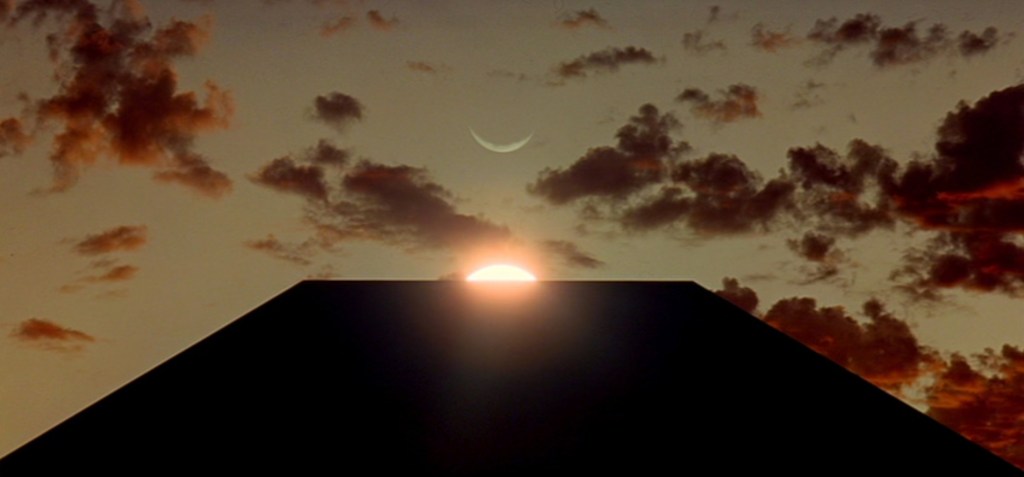
Myths provide the metaphorical landscape for the expansion and development of consciousness. Just as we collectively evolve our consciousness over time, the heroes of myths undergo transformations toward self-realization and self-actualization. The ritual of mythmaking involves meeting the audience where they are and taking them on a vicarious journey to the sublime, that sacred threshold where beauty bursts forth and lifts the spirit to new planes of insight and truth.
Cinema provides the ultimate stage for modern mythmaking. In contemporary cinema, we aspire to fuse active imagination with cutting-edge technology to breathe new life into ancient myths.
Cinema as Evolution Through Innovation
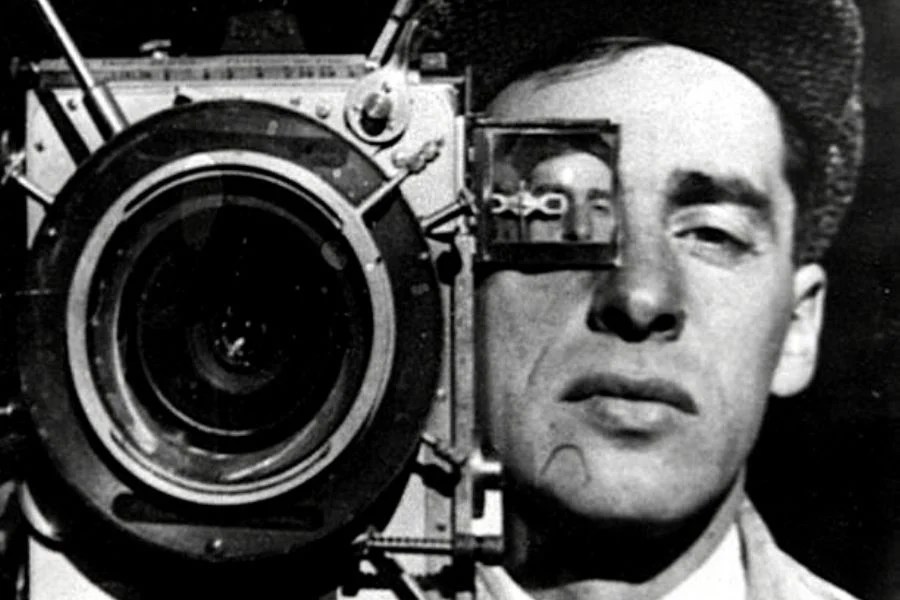
Since cinema language is the language of consciousness, the more diverse, robust, and sophisticated it becomes, the more richly it is able to create, interpret, articulate, and redefine myths. Cinema language is advanced through new ideas that emerge from the experimentation of the mad pioneers who show us what a movie can be through their inventions. Cinema is re-invented by the Jean Vigos of the world. By the Alfred Hitchcocks, Stanley Kubricks, Orson Welles’, Ida Lupinos, Andrei Tarkovskys, Federico Fellinis, Souleymane Cissés, François Truffauts, and beyond.
As filmmakers, our job is to take the baton from our cinematic forefathers and push the boundaries of cinema language as far as we can. When the language of cinema is reinvented, myths are transformed, creating connection points for new generations to take the familiar journey to the sublime and reach new plateaus of consciousness.
Cinema is a Technology for Empathy

One of the primary ways cinema creates connective points to transport our consciousness is in its function as a technology for empathy. We fuse humanism and imagination through cinema to open hearts and bridge divides.
Cinema is an Enlightenment Machine

When cinema is at its best, the journey to the sublime functions as an enlightenment machine. It casts light on seemingly opposed dialectical forces and reveals the unlikely unities between them.
Cinema is an Ecstatic Ritual
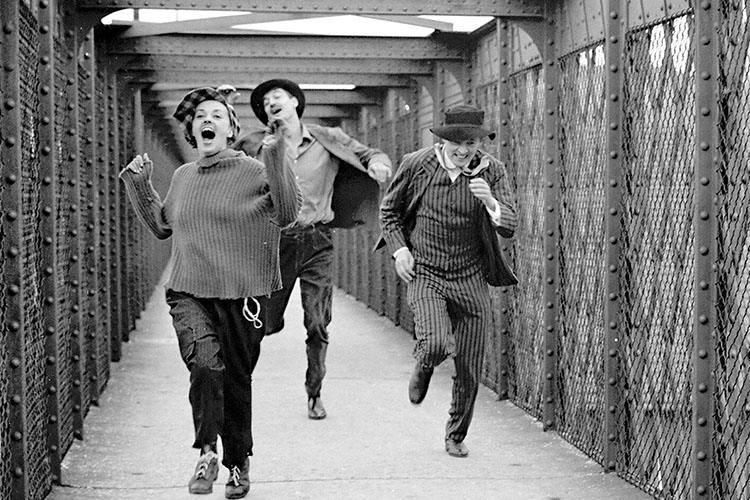
Because of the importance of cinema in shaping human consciousness as it continues to bloom toward eternity, filmmaking should be regarded as a spiritual commitment and practiced with unflinching zeal. Cinema should be fearless in its immediacy, exuberance, inventiveness, and willingness to challenge all corrupt structures and authority. Cinema should be a passionate, ecstatic medium stewarded by passionate and ecstatic people.

 Grahamblings
Leave a comment